Thursday, June 14, 2018

Tony - Short Film Review


Here’s a different type of review in store for those interested in seeing films online, as we are moving more towards online/streaming services for quality content as evident by the emergence of fiction/nonfiction content in the medium.  Which brings us to a little sci-fi thriller short film from the country of Australia called Tony, from an upcoming and talented writer/director/filmmaker Perry Lam whose previous work called Tyger, a visual poem of atmospherically driven films caught the attention of this writer.  He has showcased a distinctively retro and stylized look reminiscent of crime noir and thrillers, making him a promising new voice of today’s filmmaking culture.  This is a unique film to talk about as it is beholden to the traditions of the genre but with his creative ideas and passion for it, present within the film.  Does he continue to showcase his talent effortlessly with a slightly longer format in contrast to his previous work or does the film still have a few growing pains that keep it from being truly remarkable? Let’s dive into the film and discuss the tale being told here visually.


We follow an indentured worker named Tony (Ryan Sobolski), who must maintain the power plant that keeps the world spinning with a singular button.  A doctor named Dr. Gibson (Megan Barlow) scolds him for his incompetence and reminds him of his place in the facility as well as his duties to maintain order among their broken society.  This is made worse with his quarters being the size of a solitary cell with only a few remnants of humanity’s items decorating his room.  However, one day, he decides to take a chance and see what lies beyond the facility, by abandoning his post and making a break for the exit.  His main goal, to escape and see what lies on the other side.


The story is condensed but filled with enough context and themes to truly feel like a fully realized plot revolving around this one character’s struggles and his desire to change.  It plays its secret close to the chest and when the real reason finally is given, it does provide a different side to the story that is creatively dystopian and adheres to the cynicism of the Sci-Fi genre with a clear understanding of how to make an effective story within it.  If there were a few nagging issues with the narrative of the film, we are only given vague hints on how the facility works as well as the conundrum that rears its ugly head with the questions brought on as the story draws to its conclusion.  Otherwise, the focus on Tony is compelling and a fully realized character with a great arc despite the obscured and ponderous plot that goes in one direction but never truly explores it due to its time constraints and limitations from its story/script.  It’s still a solid and great effort from an upcoming filmmaker and the positives do outweigh the flaws present in the short film.


On a technical level though, there are some truly inspired creative choices made in making this film along with an ominous, appropriate score with sound design and a great use of production design here with only a few issues to mention.  Let’s get into it with the cinematography as it is both ambitious in its composition as well as the claustrophobic look of the film.  Especially with the playful use of the aspect ratio, to visual convey the size of Tony’s world and how enclosed it is to the widening of it as he approaches freedom.  There are some clever uses of shutter speeds to give a slowdown, blurry look to the small chase scene in this film, which gives it a strange yet dreamlike effect to the visuals to convey the state of mind of the character.   While there are the occasional out of focus/rack focusing off by a beat in a shot and it can be jarring at first with the aspect ratio shifts, the visual look of the editing from Maddison Chaplin and cinematography is of great quality and shows a director truly showcasing his voice in his work with the help of Director of Photography Chantal Jack to realize that vision.


Let’s get into the production design of the film, done by none other than Perry Lam himself as well by designing the setting of the film himself.  It has a very cluttered look to the rooms particularly Tony’s bedroom and the industrialized look of the facility from the corridors to the other rooms such as the interrogation room and entrance of the facility.  He really does an exceptional job making the world surrounding this story feel grounded and claustrophobic.  It adds to the minimalist approach to the genre and relies on the conventions of low-key Sci-Fi aesthetics.  For a filmmaker to really wear these many hats and do them well, speaks volumes to his talent especially with crafting a world that fits with the character’s journey to be free from the constrains and closed in visual design of the facility.


Lastly, the music is distinctively reminiscent of synth based, atmospheric scores of the 80’s and 90’s but used sparingly in certain places but the oddity of the film comes from the sound design of the editing and soundscape of the film.  To start with the flaws, the audio is out of sync unfortunately with ADR being applied here for the characters, leading to some oddities of the voices not matching the actors and room tone.  If intentional, it adds to the strangeness of the setting but if not, it seems that this was one aspect of filmmaking that was the most challenging to overcome and it shows.  However, the soundscapes of the effects work well in certain scenes, especially in the opening and near the middle section before the chase.  The score by Jazz D’arcy captures the distinguishing sounds of the synth-based tone for the music and works well with adding to the desolate and moody atmosphere of the world.  Overall, a valiant but flawed effort to make the sound design of the film just as much a character as the visuals.


Score **** out of *****

Tony is a very atmospheric and character driven tale with an intriguing, personal take on the Sci-Fi  genre that does fit with the overall themes of the story involving free will, slavery, and individuality.  The performance from the lead Sobolski is commendable as the conflicted, vulnerable prisoner in need of freedom while Barlow as Gibson does a suitably fine job but the use of the ADR delivery for her character made it hard to buy her as a threat.  However, the film truly shines in its technical qualities, mainly in the effective use of cinematography from the editing to shot compositions/framing of the aspect ratios (cleverly used to visually showcase the awareness of the world through the character).  It does falter with the sound design with ADR and such but the music is sublime and works to create a distinctive auditory feel to the film.  The story while not quite landing smoothly near the end, is character driven and works best focusing on the changes Tony goes through in his actions.  This is a promising and quality effort from a very talented filmmaker with a solid cast/crew working on this, to the best of their abilities despite the flaws that keep it from being truly remarkable.    


If you would like to check this film out, here is the link to see this little nugget of sci-fi tales and support a talented filmmaker with promise.  Either through subscription to the site or the low price of only $2 (about two cups of coffee there!).

https://sofy.tv/filmviewer.php?c=film&f=255

Wednesday, June 13, 2018

Won't You Be My Neighbor? Review


“You are special, and I like you just the way you are”.  A paraphrased quote from one of the most iconic media personality to have graced television as well as an ordained Christian minister named Fred Rogers.  He had a passionate and continuous goal to teach kids about growing up and enrich their lives with his long running show, Mister Rogers’ Neighborhood.  Through that show, it would be an outlet and way to help kids deal with the different life challenges and tragedies that occur in our lives.  That is what the filmmaker Morgan Neville explores in this extensive and detailed documentary that explores Rogers life from the moment he creates the show to his untimely death to cancer.  Does this film truly shed light on a prolific figure in a way that is not only respectful and heartwarming or does it falter here and there to really explore his life to the fullest?  Let’s get right into it and explore the subject and the different key themes/events that the film explores in the first ever documentary review.


The main subject of the film is Mister Fred Rogers and the numerous actors/actress, producers, family, and friends that worked and lived with him through the best and worse of times.  The opening footage of Rogers explaining how important it is to understand how a kid feels and how to reach them as a human being, setting up the exploration of his creative approach to teaching and enriching kids’ lives.  As soon as he got his show going, we learn about how he had to approach tough and mature themes/ideas through his setting of Make-Believe, by discussing death from assassination, superhero related injuries and deaths, divorce, and even racism.  All of this was made possible from being on public access station (PBS) as well as the iconic monumental statement made to senators back in the 60’s from Rogers that awarded the company with $20-30 million dollars to update the studios and create episodes to reach out to children everywhere. That’s just the tip of the amazing life that Rogers had and the film explores this with clarity and conviction in what he wanted to convey to children everywhere.


There are also little animated interludes that actually go into how Rogers thought and felt not just as a kid but how he imbued his feelings into his puppets.  This is done with the intention to explore how Rogers thinks and expresses his thoughts and emotions to everyone, which is quite unlike the average person’s ability of expression.  These sections interspersed with the footage of him showcasing how it works with him and the puppet (his favorite at first is Daniel The Tiger, kind and compassionate but he eventually becomes more like King Friday The 13th, afraid of change and always trying to make everything right with the world and people).  This is also intercut with his competition with the flashy, colorful cartoons and shows on TV that he felt was not only shallow but doesn’t quite impart to the kids how to live their life, the best way possible.  This is the way it flows throughout the documentary, the challenges and triumphs with the show along with the continuous struggle to do good in a world that unfortunately keeps moving backwards instead of forward.


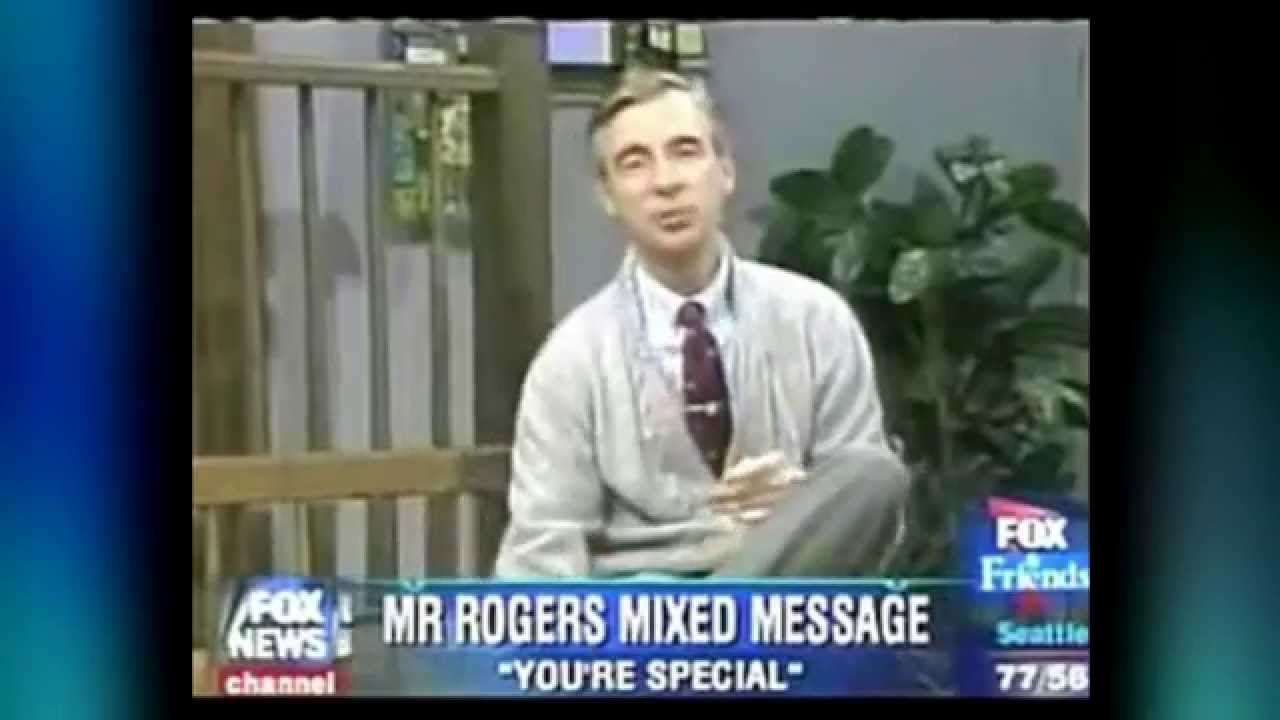
There is a pretty compelling section of the film that explores how everyone from Fox News to the harsh and hurtful feelings of the day/month/year are used as an excuse to make Rogers look like a fraud or even trying to force our own flaws onto his ideology and character.  This is done extremely well and adds a unique conflict that is both refreshing to see yet frustrating in how it does affect Rogers emotionally from doing what he loves on TV.  Despite the occasional disagreements, you understand the power of television from both sides of the fence, one using it for positivity and educational purposes, the other is using for entertainment and manipulation in the worse possible way, even if that wasn’t the intentions of the creators/producers of specific shows.  In doing so, you understand Rogers resentment of how people have abused this media form in heartbreaking ways that doesn’t quite provide solutions but it does provide reflections on how we can use it for good instead of greedy intent.

If there is a reoccurring praise to this film, it is absolutely emotionally rewarding and heartbreaking to watch as this truly unique figure does all he can to help everyone and, in the end, it is up to us to remember and impart those lessons to the next generation.  The narrative structure is refreshingly compact and moves briskly throughout his main life as a person and then the iconic father figure of TV.   There are even surprising moments throughout the film, especially when you have a section with a News Anchor just nonchalantly ask Rogers if he was gay and still stunned in disbelief that this person could be inherently good and want to be better someone else’s life.  That sums up the journey the film takes you on, the mere fact that we have a truly good person, doing remarkable things to improve and enrich the lives of children everywhere, but always have to continuously compete with the flash and noise of the 80’s/90’s kids and animated programs is nothing short of extraordinary.


As for the technical aspects, it’s a mix of historical footage, episodes of the show, the televised news/interviews with him, and the talking heads of the people that knew him, worked with him, and help keep his legacy and work alive.  The talking heads could have been jarring to sit through but here, they are used effectively with the archival footage as well as having some truly great subjects that speak about Rogers endearingly and jovial in happiness and sadness at times.  The highlight from those talking heads was François Scarborough Clemmons, one of the reoccurring actors on the show, who also was gay during a time that was very much against it and could have jeopardies the show greatly if it came out about his sexuality.  But Rogers still accepted him for who he was despite the trying times of the 1960’s and Clemmons has a great, emotionally cathartic end to that personal struggle that is worth seeing unfolded.  Everyone else talks about him warmly with funny anecdotes and moments throughout their time with him along with the archive footage of the stuff he tackled head on from Racism to Death to disability and of course, the tragic events that have hurt all of us for decades (Freedom Challenger explosion and 9/11 to name a few).


This is a shorter review than usual, as with a documentary, you can only write so much before you can get to the part where it comes down to recommendation and summarize what makes this film unique from everything else out there.  In this case, it’s the subject himself, Mister Fred Rogers. This is one of the few iconic media figures that has stood the test of time to scrutiny and even the cynicism of today’s culture.  Even when famous comedians and actors made fun of him or parodied his work with love (Eddie Murphy’s spot-on parody of Mister Rogers, genius), there is still a level of respect for him that is rare to see in media personality despite the occasional disagreement or annoyance with certain sketches and impersonators.  This is also a great inspirational story of how one person’s love and care for everyone in the world can truly conquer the fears and nightmares we have to live through every day.


Score ***** out of *****

Won’t You Be My Neighbor? is the most inspirational and truly satisfying documentary films to grace 2018 and of the film medium in general.  You rarely get subject matters and stories that are truly uplifting and hopeful in a sea of cynicism and darker, mature themes that has driven the quality of the medium up for at least a decade.  To have a positive documentary as that truly explores Fred Rogers life, philosophy, and beliefs is nothing short of astounding to how it has truly provided a positive impact to the world.  It makes his passing all the more painful as we lack that type of love, kindness, and empathy that this world could use a bit of right now, especially for the people on the internet in general.  As the film asks us to do before we end this review, close your eyes and remember the one person you care about and made happy on that day.  That’s what Mister Rogers would have all of us do, whenever we feel blue or not special in this world.


Saturday, March 31, 2018

Ready Player One Review


As we progress further into the future, we have two worlds to contend with, starting with the real, dull one and the virtual one where anything is possible.  This is the conceit for the nostalgia driven, video game adventure known as “Ready Player One” by author Ernest Cline.  His book was a love letter and reference haven for 1980’s pop culture but media in general from video games to TV shows and films.  It was a loved and popular book upon its release in 2011 until upon closer examination/critical eye as well as the shifting social norms of gender equality; time has not been kind to it.  However, we have Steven Spielberg taking on the director’s seat along with Zak Penn with Ernest Cline writing the screenplay for the film adaptation of this book.  Does it completely come together and prove that Spielberg’s got the magic touch for genre films or has he lost his ability to provide any spark of creativity and magic to his films outside of period dramas?  Let’s dive into the Oasis and see just how this virtual playground works.


It is the year 2045 and the world has crumbled from pollution and corporate interests sapping the resources dry, along with people living in trailer park complexes known as The Stacks.  This is where Wade Watts (Tye Sheridan) lives with his surrogate family as a down and out of luck teenage kid that spends most of his time as Parzival in the digital world called The Oasis.  It is a computerized universe where anything is possible, but it was created to the likes, favorites, and whims of its creator James D. Halliday (Mark Rylance) who loved all things 80’s pop culture but included everyone’s love of the other decades as well.  He left a quest line open for those interested in pursuing it upon his death by the way of an Easter Egg through 3 trials locked away by 3 different keys.  Those that could find the keys and clear each challenge would not only complete the quest but also inherit $500 billion dollars and owner of the Oasis.  It has been a sought-after prize for as long as the Oasis has existed.


However, all that is going to change when Wade discovers the first clue that leads him to the first key and finally the first trial.  However, his rival Art3mis (Olivia Cooke) follows right behind him along with his buddy Aech (Lena Waithe) and two other players from Japan called Gunters, seekers of the Easter Egg named Daito (Win Morisaki) and Shoto (Philip Zhao).  Finally, on their heels both digital and for real, Nolan Sorrento (Ben Mendelsohn) himself, the CEO of Innovative Online Industries (IOI for short) hell bent on winning the prize with his legion of gamer soldiers as well as using dirty and deadly ways to win the quest at all cost.  It becomes a race and deadly game of questing, friendship, romance, betrayal, and war for control of not just the Oasis but the very future of the world.


It is clearly its own story with only certain elements from plot to action beats used from the book, but it captures the fun and adventurous spirit of the story with spades, somewhat.  This is a rather odd critique here but, it is at its best when we see the Oasis as well as the trials/challenges they work through but not when it focuses on the real world or even the teenagers, kids, and young adults that drive these avatars.  The problem is we are only given a few times to develop the characters from their typical arcs or even connect with them before the next action sequence kicks in.  It goes more along the lines of the standard hero’s journey from loser to hero arc that we have seen done better and more inspired than in this film. 


It is disappointing to say that Spielberg plays it safe with this film and goes through the routine of telling a fun if shallow action adventure story with perhaps the best and most inspired 2nd act that truly shows what the film should have been the whole time.  With no spoilers, it is a loving tribute and homage to a filmmaker’s classic film, recreated meticulously with love and respect for that film.  It is in that sequence that the film comes the closet to capturing the sheer zany fun and nostalgia inspired genius that made the book iconic and loved when it first came out.  The rest of the film never truly lives up to its video game adventure premise, from the awkwardly expository beginning to the overly stuffed and bloated third act.  It never earns the message it tries to deliver at the end about the dangers of VR as well as relying on nostalgia and pop culture as an escape from reality.  It never bothers with developing those themes as it solely wants to entertain and nothing else. 


It doesn’t help that the real world is never truly explored or developed to understand why everyone is living in The Oasis.  Also, the logistics of the technology seems to have its own questionable functions, but the film moves so fast in pacing, that it never truly takes the time to at least let the viewers be part of the world within this story.  There is also a romance between the leads that feels forced and rushed along with zero chemistry to buy their affections for one another so quickly.  They did get rid of at least the creepy components to the story-line but it comes at the cost of feeling like an add-on that goes no where just like the thrown in references that actually played a big part of the story or action sequences in the book but never given context during the translation of the story into the script adapted for the big screen.  The story has its moments of excitement and ingenious use of nostalgia to create a cool sequence or related to the quest but anything real world related or focusing on the characters themselves falls flat and dull.


The characters in their arcs and motivations have been completely changed for the better by simplifying their development and relying more on chemistry and group interactions to make them shine in the film.  Wade Watts is the typical generic zero to hero character that is at least made decent to at least follow along, with the fine if bland performance from Tye Sheridan.  The main stand out was Olivia Cooke as Art3mis, who is given clear motivations and gives a committed, charismatic performance that makes her a character that is easiest to root for.  As for Ben Mendelson as the villainous Sorrento, he really hams it up with his performance and comes across as an inept cartoon villain literally, but he is still fun to watch as the new go-to villainy casted actor.  These are the main characters that we follow throughout the whole film.


The supporting cast is also perfectly fine but is also only given the bare minimum of development time to establish them and nothing else.   They are only in a few scenes in the real world with most of their performance being voice driven for animated characters.  With Aech, the performance from Lena Waithe is at least funny in the right spots and provides a good companion role for the lead as well as the Asian Gunters of Daito and Shoto mainly in how they portray their characters despite being just there for the cool moments of the action sequences.  Then you have actors that serve as bit players like Simon Pegg as Ogden Murrow while Mark Rylance provides the emotional element of the story even if it’s not at the forefront of the main plot.  The reason for the crunched in section for the actors/characters is that they are never truly given a chance to stand out among the CGI creations and the big action spectacle that unfortunately drowns out the human components of the story and performances. 


Let’s get to the technical aspects of the film starting with the action set pieces themselves that are both CGI driven and practical to an extent.  For the action set pieces in the Oasis, they are thrilling and intense to watch especially the explosive and chaotic opening race for the first key.  It has its moments of inventive references and eye candy to the extreme, but it is a bit of a disjointed mess overall and not the best way to really open the film.  The second act has the best action beats from the Disco dancing date straight from the book to the surprisingly clever and wonderful recreation of a film that has a personal connection to the director that provides the excitement, mystery, callbacks, and referential adventuring that was the book’s strongest writing quality brought to life on the big screen.  However, it eventually becomes a blinding, overloading mess with its final act as it combines action beats from The Oasis and real world with nostalgic callback/reference overload in full gear for better and worse to the entertainment factor.  Simply put, the Oasis is fun to watch at least but the real-world elements are meandering and very sluggish to watch.


The next aspect to explore is the cinematography of the film, which will be tricky as it combines the old and new methods of visual storytelling with uses of studios, green/blue screens, and CGI animated worlds.  The film was shot by Janusz KamiƄski (his go-to cinematographer on numerous films since 1991) and it tends to combine the signature looks of Spielberg’s films with fully formed CGI worlds.  It is an odd combinations of visual film styles as it adheres closer to the way James Cameron’s adventure film Avatar was made by blending animated film with live action for the other half of its film.  Other than that distinction, the film is mainly animated and is more interesting and fun to be in than the real world which was intentional.  It looks visually stunning at times and each frame is filled with something video game, movie, tv, or anime related references along with the colorful palettes of the custom created avatars.  This leads to the one aspect of the film that has everyone talking and curious as to how it factors into the story meaningfully or just there for the sake of it.


The references and callbacks to each decade of pop culture is all over this film from the obvious connections of Back To The Future with the Delorean and items related to that film but also creations such as Battletoads, “The A Team”, “The Batman and Robin Series”, Akira, Stephen King’s Christine, Robocop, Hello Kitty, “Mobile Suit Gundam”, “Firefly”, Spaceballs, the Bespin Cloud Fighter from The Empire Strikes Back, The Iron Giant, Street Fighter, and many more.  The film is galore with blink and you’ll miss shout outs to these iconic or obscure references.  There are both meaningfully implemented in the film but also can be pandering by the very end especially with the big battle that feels a bit like the nickname it has been given to the film called “Reference: The Movie”.  It is very much a mixed execution on how they are utilized to created and establish the way the world works for the story or the atmosphere surrounding it. 


This leads to editing itself as the film must devote time to both the animated and real world equally.  It does create a sense of dissonance with how the story flows in both worlds as there are a ton of inter-cutting between the two.  It seems fast and energetic at one point but it slows down and feels ponderous as if to take a breath before the next set piece or plot movement.  While that editing choice is intentional, it does mean that the film tends to feel rushed for most of it as it seems driven more by action than developing the world or characters.  It just needed another pass or even some scenes that develop the characters to help make the viewers care about their adventure and goals against the villains.


Which brings us to Sound Design and Scoring for the film as our last technical aspect to explore before it’s time to quit this game for final thoughts.  The sound design is a mish-mash of different effects and sounds from numerous films/media that are associated with the references ala Pulse Rifle from Aliens or even notable music cues related to films especially with the composer Alan Silvestri and his previous, iconic theme for Back To The Future.  It is another source of Easter egg references that is less obvious but lovingly rewarding to spot them.  This leads to the original score from Silvestri, who remixes his own work to create score that works in moments and drives the action on the big screen with a ton of notable melodies and cues from his previous work upon hearing it.  The sound design is wonderfully handled and is yet another part of the film that is handled with exceptional care even if the script/characters/story didn’t receive the same treatment.


It can be challenging to go into a blockbuster style film expecting for it to be more than the sum of its parts but Ready Player One comes very close to being as remarkable as Spielberg’s classics or even flawed but memorable films and this one, kind of falls more along the lines of close mindless popcorn fun but ultimately forgettable.  Where the film truly shines is in its technical qualities of visual effects and sound design along with some visually fun and exciting action sequences in the Oasis as well as a stellar 2nd act surprise that comes the closet to capturing the nostalgic zany fun of the book.  However, its shallow, flat characters, shaky opening act along with a bloated and overlong finale, failing to juggle its message with spectacle for mixed results, and tethering on pandering at times in regards to its references in relations to its thin, basic storyline makes for a film that is a ton of fun on the surface and tasty as delicious candy but is hollow and ultimately fades away before you can appreciate how good it really was to have it.


Score *** out of *****

Ready Player One is Steven Spielberg’s seminal blockbuster film release of this year and it comes close to re-invoking the magic and sentimental fun that was always easy to find in his films.  The film shows that confidently in its visual splendor of the Oasis along with the numerous references and callbacks to decades of media from the 80’s to today.  It captures the spirit and adventurous joy of the book in its second act starting with the Disco Date to the finale.  This coupled with expertly crafted visual effects with a remarkably familiar sound design makes for a euphoric visual/audio experience for the right viewers.  However, in shaping the spectacle in front of our eyes, they forgot to develop their flat and uninteresting character archetypes to standout in this film along with the thin, generic good vs. evil plot that hints at some bigger theme and message about the dangers of VR and nostalgia, only to leave it on the wayside for more action and “look at that!” moments.  This means the film lacks the depth and nuance that makes a film go from being just good but forgettable to great and memorable.  This is a fun ride for sure but it’s one that might not stick with you once those glasses come off and you’re heading right back out into the real world.