Wednesday, August 15, 2018

Crazy Rich Asians Review


With the summer ending for this year of films, we have the anticipated film adaptation, based on the popular book trilogy from Kevin Kwan called “Crazy Rich Asians”.  It has been too long since an Asian driven film was made and released through the studio system based on another book, the engaging and sensitive family drama The Joy Luck Club and now we have this film coming out in theaters instead of streaming services where the romantic comedy/drama have found great success these days.  Directed by Jon M. Chu, not only does it star the latest Asian actors and newcomers from both America and Britain, we also have a focus on all aspects of Asian culture inherent to the story and the characters inhabiting this film.  Does it transcend those barriers and inherent cultural identities to tell a truly relatable and charming romantic tale of family and relationships for a modern time or does it fall into the trappings that have made this genre of films stagnant for years?  Let’s take a trip to the lands of Singapore, China and look at the talk of the town with the story.


The story introduces us to the Young family with Eleanor Young (Michelle Yeoh) buying a hotel in London, England as she is married to a royal prince of British descent with Nick Young and Astrid Leong-Teo as young children seeing how their world views would be defined by their mother’s use of her prestige and power of their name and wealth.  This leads us to the main focus of this romantic tale on Rachel Chu (Constance Wu), an Asian American NYU economic professor who teaches game theory but she has also been in a long term relationship with the grown up Nick Young (Henry Golding).  Nick’s best friend Colin Khoo (Chris Pang) is getting married and has invited him to be his best man at the wedding, with Nick inviting Rachel to come along to meet his family as well as his mother specifically.  This bit of news explodes on social media and reaches his family, piquing everyone’s curiosity and interest in the Asian American outsider that is dating the most popular bachelor of Asia and heir to the Young’s estate as well as their wealthy business ventures.  Rachel enthusiastically goes with Nick to Asia for the Wedding and she learns in a first class, expensive cabin on an Airplane to Singapore just how powerful and rich Nick truly is over in Asia.


They start their trip with the enjoyment of the pleasant food culture of Singapore with the engaged couple as well as Rachel reconnecting with her best friend and former college roommate Goh Peik Lin (Awkwafina), who actually gives her the rundown on how powerful the families are and not just on a wealthy level, but in regard to respect and influence of their family around the world, akin to the inherent nature of royalty.  However, Rachel meets with Nick’s mother, Eleanor and she is very cold and distant to anyone that has not been groomed within a native family with prestige and respect, with a clear disdain for Asians growing up in America with that country’s values.  On top of having to win the affections of Nick’s mother, Rachel learns about and connects with Nick’s extended family from Astrid Leong-Teo (Gemma Chan) to Oliver T'sien (Nico Santos), Shang Su Yi (Lisa Lu), Eddie Cheng (Ronny Chieng), Fiona Tung-Cheng (Victoria Loke), Alistair Cheng (Remy Hii), Alexandra 'Alix' Young (Selena Tan), and Felicity Young (Janice Koh), as she discovers just how eccentric, manipulative, and truly fantastical the world she has found herself in over in Asia.


This is a classic fairytale romantic comedy for a modern time but giving enough dramatic heft and conflicts to give the stagnant, formulaic genre some new perspectives as well as a great ode to the romantic comedy classics of yesteryears from the old days of Hollywood.  It pretty much follows the traditional beats of the genre well but does so with passion and the help of a stellar cast of actors/actresses with a wonderful chemistry to make their characters truly shine in the film.  It also has universal, relatable themes of family, marriage, love, relationships, and the clashing of values and cultures of natives with immigrants especially in Asian society.  The main romance between Nick and Rachel is truly charming and endearing to see them together, thanks to the capable script from Adele Lim with Peter Chiarelli and the committed, affectionate chemistry between Wu and Golding.  They are the beating heart of the story and their conflicts with each other as well as with Eleanor and her stern, family values are what gives the dramatic elements of the film weight and resonant strongly especially with those that always seem to have to choose between those we love and family we trust wholeheartedly.


Let’s get to the comedic elements of the story as it harkens back to the traditional style of comedy that was more reliant on satirizing gender roles and societal culture with wit and style.  That’s what you get with the writing for this film and it shows how much fun it must have been to provide some great natural humor with the family members of the Youngs interacting with the other families that are lower in statuses and power.  Rachel is also given a few humorous beats with her friend Goh Peik Lin (Awkwafina) providing some great cultural opposite comedy with her lifestyle and family always berating her failing in America unlike Rachel.  You would think they would have some low brow humor that would be crass thrown in but that is kept to a minimum thankfully with a reliance on character interactions and cultural satire to provide most of the quaint, humor with only the beginning montage being modern with its humor but it provides the laughs in the right places and becomes dramatic when the story calls for it.  It was important to distinguish these story elements as it is a balancing act between the two tones and styles, with the director/stars/and writers handling with finesse and respect towards the source material it is adapting here.


As the story is truly about Nick and Rachel’s romance and the personal family drama of winning acceptance with Nick’s mother to be considered apart of their family, we also follow the other family members in Nick’s extended family line with the focus on his favorite cousin Astrid Leong-Teo.  Her story is one surrounding a marriage where she and her husband Michael Teo (Pierre Png) want to be happy but strangely, not with each other.  It is with this storyline that it does go into soap opera territories that is compelling and does provide some decent heartbreaking romance drama, but it really doesn’t affect the main plot in a meaningful way.  Most of the family is essentially played mainly for humor and comedic relief.  While it helps to see how the other family members are for comedic scenes and effect, the dramatic subplot with Astrid isn’t given the time to be impactful or feel important to the main storylines.


Let’s get into the cast themselves, starting with the leads playing Rachel, Nick, and Nick’s mother Eleanor.  Constance Wu is truly phenomenal as the female lead for this story, portraying the innocent yet curious character she is for most of the film and truly handles both the humor and the eventual dramatic beats to truly be a well-defined and positive view of Asian American women as an actor and character.  While Wu truly carries the entire film, you can not down play how charming and amazingly charismatic Henry Golding is as Nick and while he does tend to be on the sideline for the majority of the second act, he truly clicks with the cast and Rachel to provide some natural humorous moments as well as making the romance believable.  In a role that is completely different from the other characters she plays especially as a former action star, Michelle Yeoh provides some classic stern motherly qualities with delight and truly imposing especially as the one person who questions Rachel’s intentions and her love for her son.  Those were the lead actors that are a part of the main storylines and played wonderfully by them.


We now get to the supporting cast and the ones that truly standout from the ensemble in either a comedic or dramatic role in the story.  One of the memorable comedic relief characters is Goh Peik Lin (Awkwafina) and she is truly very comfortable in the role as well as providing some good-natured humor with the lead characters as well as the dynamite chemistry with Constance Wu.  Astrid played by Gemma Chan (From the TV show Humans) is wonderful as the disenchanted wife and provides perspective on marriage through her character that is refreshing to see in a romance film, despite the issues with the subplot in general.  Everyone in the cast is great in their respective roles and scenes be it for comedic or dramatic purposes but a special mention towards a veteran actress Lisa Lu as Shang Su Yi, providing actual credibility to the culture represented here as well as a surprising respect for Asian talents from the past.  Those were the cast of the film and they were all marvelous together, as they elevate and make the script come to life on the big screen confidently.


It is now time to focus on the technical aspects of the film, starting with the use of cinematography and editing especially for this type of film set internationally as well as utilizing comedy throughout the film.  The DP for the film was Vanja Cernjul and his team showcases the beauty of Singapore along with the street/night life with the crew on hand.  They really make each locale from the opulent houses and resorts to the inner streets of Singapore pop out vividly as it is always very bright and colorful for most of the film but only goes muted in colors or cool within its color tones when the drama takes center stage.  As for the editing of the film by Myron Kerstein, it moves briskly with a lot of humorous and lively energy in the first half with the second half slowing down to allow for the character dramatic beats take over when the storylines come to their climatic movements.  The film is shot beautifully with its use of colors and lighting as well as the editing matching the fast and kinetic pacing at play here for its humor and world but slowing down enough for the drama to develop the characters/storylines.


Now we get to the aspect of the film that truly comes to life and that is with its art design/direction starting with the set design itself.  The production design was done by Nelson Coates along with art direction by Leslie Ewe, David Ingram, and Gary Mackay as well as set decoration by Andrew Baseman.  They deserve mentioning as the setting and world the characters inhabit are nothing short of stunning as they take many inspirations from the Queen of Versailles and so on to represent the wealthy dynasty of the Asian families with an Asian stylistic look to it.  Each locale in the story harkens back to the larger than life, spacious places of the old Romantic comedy films that utilized those art designs to showcase the powerful status of the character’s world as is the case with the Young family.  It is simply gorgeous and truly brimming with creative ingenuity and love for that era of filmmaking set design found in the romantic classics of old, enhanced by the stylings of Asian architecture and culture permeated into the look of the setting.


There is one more aspect of the art direction that must be mentioned and it is the visually eye catching costume work done for this film.  The designer of the many costumes for this film was done by Mary E. Vogt, who has designed so much iconic costumed looks from many genre films such as Dune and Batman Returns to name a few of her credits.  It seems to be a fusion of Asian and European designs to match the character traits and personalities as well as the inclusive but close knitted nature of these Asian royal families’ world.  Every character is very much distinctive and truly bursting with character in their costumes that truly defines them in their exquisite dresses/casual wear of the women and tailored/flashy looks for the men.  The costuming work for this film is truly top notch and worthy of accolades and recognition for every costume that were designed and wore in this film. 


Finally, it is time to look at the use of sound design and the soundtrack/score for this film as it was shot on location around Singapore as well as the expected use of popular songs throughout the film.  Well, the sound design is handled well enough especially for a studio production as the natural sounds of Singapore are heard along with the actors coming through clearly and the effects are appropriately applied for comedic or dramatic moments.  The score was done by Brian Tyler and his score uses an interesting mix of Jazz and traditional orchestra for the parties and the dramatic scenes effectively.  There is a notable use of pop songs and such for certain montages and it fits those scenes just fine but really the score provides some great variety to the soundscape of the film. At any rate, the sound design is fine along with a great companion score as well as some proper use of pop songs for certain scenes and montages.


There was some skepticism regarding the overall quality of this film before seeing it as it ran the danger of being bland or generic romantic comedy with an Asian cast/crew attached to it especially with the unproven talents of the writers and the unremarkable film work from Jon M. Chu.  However, as soon as the credits rolled, this was proven misplaced as everyone on this production brought their A-game to their respective roles in front and behind the camera to create a very charming, endearing modern day romantic comedy that is relatable in its humor, drama, and characters but with the added bonus of exploring and representing the cultural values and belief of family and respect for lineage/heritage through the lens of Asia.  It also helps to have a wonderful ode to Romantic cinema of old in its lovely, distinctive characters, witty and dynamic script, steady direction, and extraordinary looking film from the costumes to the world the cast inhabits.  This is a surprising quality modern film entry for the romantic comedy genre and a well-made one at that.


Score: ***** out of  *****   

Crazy Rich Asians is a loving update of the classic romantic comedy formula for a modern-day audience and it works on numerous levels that allow for a quality, entertaining comedy/drama of family and romance as well as providing a different look at Asian culture and characters that is rarely explored in storytelling and media.  It deftly handles the use of comedy and drama well especially as the film starts out in a fun, energetic vibe but transitions to the grounded and all too relatable family drama that feels earned and resonates powerfully on an emotional level.  The cast is truly fantastic as an ensemble but elevated by the inspired and wonderful casting of the lead characters from Constance Wu to Henry Golding and Michelle Yeoh at the core of the main story. The supporting cast are likable and provide some truly great humorous moments along with the use of witty and dry humor throughout the film akin to romance cinema of old.  It is also a gorgeous looking film from the cinematography to the art direction of the whole film’s setting and costume design.  If you wanted a modern day romantic comedy to rival the classics for a new generation, this film is more than up to the task to do so. 

Monday, July 16, 2018

Sorry To Bother You Review


What happens when you combine the volatile climate of political/social strife with a fantastic, up and coming cast, sharp satirical writing/direction, and film-making at its most inventive and creative? You get the truly eye-opening debut of writer/director Boots Riley called Sorry To Bother You, an absurdist, dystopian comedy that is not only a reverently, darkly funny film but also one that is subtle yet hard hitting with its commentary on society as well as the culture being shaped by corporate interests.  This was a critical darling during South By Southwest and has generated buzz at different festival with a talented and diverse cast at work here along with a great premise surrounding a telemarketer’s rise to power and the illogical world that surrounds that work culture in contrast to impoverished world surrounding it.   How does this film truly stack up to the greats of comedy/even science fiction itself (no spoilers but it does relate to that genre in a big way) and what does it do differently enough to tell its own cautionary tale in its own unique voice?  Let’s dive right into the call and check out this film’s story.


We follow our laid about but hopeful stoner Cassius Green (Lakeith Stanfield), who is looking for work and to provide a better life for his girl Detroit (Tessa Thompson) who is a performing artist that thrives on the belief of true self and rebelling against the norm.  They live in the lovely, rundown neighborhood of Oakland, California with his uncle Sergio Green (Terry Crews) and his family housing them in a spacious but dingy garage.  This is a society that has now become accustomed to free labor through a program called Worry-Free that promises to provide free food, bedding, and housing in exchange for your freedom and identity.  Not really liking that prospect from the leads, Green heads to a job interview for a telemarketer position for the company RegalView compliments of his friend Salvador (Jermaine Fowler).  Green has a rough time at his first days working as a telemarketer sales rep, as he continues to be rejected constantly by using his actual voice.


He is comforted by his girlfriend and approached by his co-worker Squeeze (Steven Yuen) to form a union to get workers paid fairly and on time as they should be, despite Green’s hesitation to rock the boat.  Until he is given advice by Langston (Danny Glover), a veteran sales rep that tells Green to use his white voice that resides in himself to change his very being to earn those sales and make money.  He demonstrates this (cameo by Steve Buscemi) for the newbie and Green gets it instantly.  Green finds his inner white voice (David Cross) and becomes RegalView’s top tier sales performer in the country, much to the dismay of his struggling friends and colleagues as well as his girlfriend.  He completely transforms himself and will discover as a power caller for the company that being the best, means having to change in ways that go against our own beliefs and humanity, which might reflect a different kind of prison.  Green becomes a part of a struggle between the working class and the rich and powerful, as he changes through the power of his voice.


This is a truly ambitious and satirically scathing film that makes it very clear of its themes, ideas, and subject matter it wants to make fun of or even provide thoughts on using comedic exaggeration.  When the film does this within its hyper-reality confines of the world and setting, the film fires on all cylinders in its delivery of the classic but zany rise and fall story well, lead by compelling performances from the entire cast.  The story zips through so much conflicts and ideas that are provided visually through satirized reality tv shows, the idea of slavery still being around in modern times but in the guise of indentured service, and the contrast of the lower class and upper class through the work culture.  This is what the film does exceptionally well, at taking our known realities and ramping the exaggeration up to the point where the conflicts mirror what we put up with everyday and this is excelled by the visual language of cinema feeling very passionate and strong throughout this film.  It seems like a perfect concoction of great visual eyes and sharp writing with a youthful, energized voice to really explore this wacky tale of artificial humanity for the process of making money and the conflicts that arise from it, what could possibly be flawed in this film?


Well, there are some problems inherent to the film in its pacing and most importantly, the views on this film being identified as Science Fiction as well as a comedy without giving away the very core nature of this story.  First off, the pacing does start off sluggish in the beginning, as it took some time for the story to kick in before we really get used to being in this story’s world.  For as much as it keeps to its hyper-reality, it does go completely bonkers by the end of the 2nd act and shows its true nature in the most hard-hitting and unsubtle way possible.  This is where the film completely goes insane and does lose the amazing momentum and subdued comedy/drama that made its middle act so enjoyable to watch.  That doesn’t mean it’s a failure in execution, but it does come completely left field and there will be viewers that could be confused by the analogy that the twist does have to racism and slavery (the only clue that will be given here), which are at the very core of this story’s conflict for the characters to overcome in this film.  However, even with these misses, it is still amazing to watch it miss as well as succeed in what it does well, the comedic exaggeration in harmony with its hyper-reality without feeling disingenuous, pretentious, or even condescending as most film dealing with racism and slavery struggle to find that balance.


Let’s get into the talented cast in this film starting with the leads and then the supporting cast, with the focus on Stanfield as Green.  Stanfield is truly a versatile actor that embodies the everyday man stoner of this lead character and handles the changes the character goes through well.  David Cross as his white voice is reliably funny and really adds to the surreal nature of the story’s atmosphere.  Tessa Thompson as Detroit provides a very relaxed but committed performance as the rebelling artistic girlfriend that conflicts with the problems of society’s use of Worry-Free labor.  The leads are great in the roles and provide likable yet larger than life characters to follow into this dystopian society that is not too different from ours.


The supporting cast is very diverse in talent and characterization that add to the grounded yet surreal nature of the story.  Steven Yuen plays Squeeze, the radical worker that is always going against the norm of the work force for better wages and he plays it earnestly with humanity to the character.  Another stand out of the cast is Jermaine Fowler as Salvador, who provides some great humorous moments both crude and subtle in timing and his interactions with the other characters.  However, Armie Hammer as Steven Lift (a parody of Steve Job) totally steals the second half with his arrogant, obliviously evil character that does way too much coke and completely ignorant to the world/society that doesn’t involve dollar bills. There is also Omari Hardwick as Mr._____ with the voice from Patton Oswalt providing a stern but dry humorous performance to contrast with the chipper, upbeat performance from David Cross greatly.  The entire cast is on point here and that is a credit to the sharp script and confident direction on display here.


Let’s get into the technical components of the film, starting with the art direction of this setting and the combination of the grounded with the exaggerated.  The setting for the film is Oakland, California and it’s about as rundown as it gets contrasting with the nightlife, seedy parts of the world with the characters lower in status than the power callers.   There is a great blend of urban poverty with the sleek, cold lifestyle of corporate culture in the locales and settings especially being set around California.  The only visual motifs that has futuristic elements with the Worry-Free factory along with the reality show “I Got The S*!T kicked out of me” along with the great use of space with each locales to showcase the economical disparage of this world.  It is wonderfully crafted in its art direction in creating an exaggerated reality to the setting of this story that matches the satire it instills in its visuals.


Next up, the cinematography and editing of the film from structure to the distinctive look of the film.  The film uses a wide range of colors especially for a film that deals with some heavy and real subject matters by using it effectively to showcase the struggling conflict of the lead and the two worlds he inhabits.  The director utilizes his music video experience with the editor Terel Gibson to really play with time and motion within a scene that allows for the absurdist comedy to happen in the film.  The editing is solidly put together and allows for the characters to develop with each other and feel the impact of the changes they go through especially with the character Green.  While it does have its pacing problems in the beginning and loses its focus by the time the last act rolls around, it is a visually vibrant and energized film that is committed to its story and characters even if it doesn’t always stick to the landing.


Lastly, the sound design and music score from Tune-Yards & The Coup that features mostly composition music as well as the use of non-diegetic sounds to establish its style for the film. The sound design is very much a character in this film as we have sounds that do not match the source of it, within the characters putting on their white voices.  It is well timed and provides for some truly subtle humor in a film that is mostly about the abstract and absurd with its comedy.  As for the score, it is a mix of synth/hip hop beats with classical music that serves as an interesting contrast for where the characters are within the story.  The important takeaway is that the sound design for this film is used effectively and adds to the surreal nature of the film’s story and comedy.


Sorry To Bother You is one of the most inventive and relevant social comedies that touches upon ideas and themes that our culture and world can relate to in its satirization of it.  The enthusiastic and well put together cast really make the most out of this sharp and witty script through their fully realized performances.  This is made possible by the confident direction from a first-time director but also a musician who has a keen eye on how to tell a story with meaning and purpose without losing its sheer entertaining value at all.  Thankfully, the film comes together as a whole and presents ideas of racism, slavery of all kinds, corporate culture, and media oversaturation despite its few shortcomings in balancing these story elements with the characters as well as its odd, possibly alienating finale.  So, if you have what it takes, sign up for RegalView and you can be a “Power Caller” as well!


Score **** out of *****

Sorry To Bother You is the surprising gem of the year that comes out of nowhere to be not only reverently funny but insightful with its commentary on the troubles of the world today.  It invokes the energy and passion of other satirical comedies of the past few decades in its absurdist approach to the story as well as the eccentric characters that inhabit this exaggerated yet grounded world of Oakland, California.  The story reaches its potential and peak in humor and satire by the time the film hits its second act despite a very slow, ropey beginning and its ludicrous and uneven finale.  This is made better and truly entertaining by the terrific performances from the entire cast including Lakeith Stanfield and Armie Hammer turning in amazing performances, with everyone else fitting into their characters and playing to their strengths as actors.  It also has an exceptional sound design that plays with the idea of having voices not match the actors to demonstrate the key characters’ white voice along with a unique blend of classical music with synth, hip hop beats throughout the film.  This is one call you might want to take, because it might give you something to reflect upon with today’s world, while have a blast with this larger than life, surreal comedy.

Thursday, June 21, 2018

Bao - Short Film Review


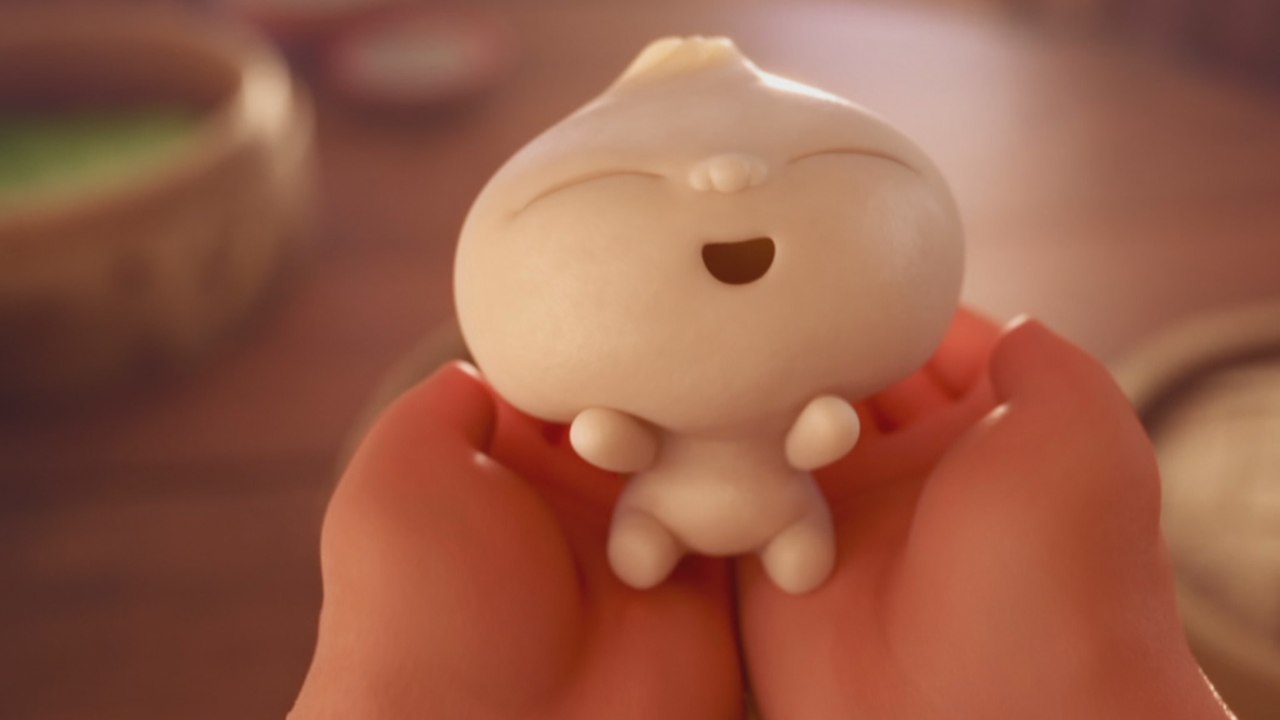
Before the superhero action kicked off in a screening for The Incredibles 2, there was a very unassuming, odd short film to precede it and it would be not only truly a heartfelt tale of motherhood/family but might just be the most accurate, spot on representation of mothers and sons in Asian American culture.  This film is called Bao, a Chinese dish that is essentially a steamed bread roll made with meat and vegetables wrapped into one.  It is both strangely cute yet an absolute joy to watch as it relies on many inspirations of Japanese Anime mixed with the traditional look of Disney animated films.  What makes this film so surprising and most importantly, a much-needed story to be told especially for Asian creatives out there? Let’s cook up this dish and look at it, starting with the story.


It is a story told through visuals and no dialogue, as we follow an Asian Couple in San Francisco living their lives together until a small little bread roll of Bao comes to life, like a new born baby into their world.  She ends up taking care of Bao and treating the bread roll like her own son as she mothers it and gives it all of her love.  However, as the years go by, the little Bao wants to see the world, connect with others, and grow up but ironically enough, she holds him back out of fear of losing him completely.  Bao eventually comes to head with his mother as they deal with the realities of growing up and motherhood, as it becomes the very thing that separates and brings them together.


When you see and understand what the tale has to say about these themes and the resolution of it, it is nothing but truthful, brutally real, and yet endearingly heartfelt in its intention of the story.  This is what makes it so unique from the traditional coming of age, family drama as it is truly stemmed right into Asian American culture especially with the writer/director Domee Shi helming this project as a storyteller that truly created this cute film out of her personal experiences and life story that many Asians can relate to, in some degree.  It is also got a bit of that Mizaki style to the writing and storytelling of the film as it evokes inspirations like Ponyo as a clear-cut example of what the filmmaker possibly drew on with this film along with the numerous animators/computer engineers to craft this short.


On the technical side, it has a very distinctive art direction to the world and the CGI/character designs as well as the use of Asian instrumentals for the score.  There is a great use of the real world and the settings that are part of this culture, from the look of Chinatown in San Francisco to the bakery filled Chinese dishes of a family owned shop.   It truly feels and looks like a believable world as well as capturing mature Asian women gracefully in animated form.  As for the design of Bao, absolutely strange, weird, and ends up being adorable as well as truly relatable when you see how it relates to a certain character arc.  Everything about its art direction is truly nothing short of phenomenal in how it captures Asian American culture and motherhood so passionately and truthfully, which gives it an edge over most animated shorts and your traditional coming of age story.


As for the score itself, it relies on a combination of traditional low-key orchestra with traditional string instruments related to the style of Asian Orchestra and it’s a perfect combination to represent the cultural clash of this little Bread Roll growing up as the music becomes in tune with Bao’s development.  It’s very effective and used to great effect along with the reliance on sound effects and music to tell this story.  This is yet another animated short film from Pixar/Disney to rely on visuals and sound design of the world/music to tell its story and it makes one appreciate how a shot can tell a clear, concise story more so than a dialogue exchange to express that point.   The sound design is on point here along with a wonderful Asian styled orchestra score to really encapsulate the story and setting through sound.


With the rising popularity of stories being told from everywhere from within different cultures and people instead of just a conceived perspective or notion from outsiders of them, Bao represents another important and heartfelt step for Asian Americans and the creative community within.  This is truly a very passionate and personal tale of motherhood and growing up that comes through in the sharp, concise writing and direction of the story as well as drawing from real life experiences that even this writer can attest to, despite being a mixed Asian.  The artistic look and soundscape is exceptionally crafted to really enhance and make this world believable for the short time we spend in this world.  This is one animated film that will be remembered for how it truly brings a unique human story that everyone can relate to, especially in its themes and characters.


Score ***** out of *****

Bao is a special, heartfelt animated short film that truly crafts this traditional tale of motherhood and growing up into something truly unique and showcases Asian culture in America in a way that is both endearing and truthful.  Domee Shi wrote one of the most concise and layered scripts that has been done on film as well as the truly steady and passionate direction to make it accurate and capture the slice of life for Asian Americans growing up as well as the elderly community’s lives as well.  The sound design is truly representative of the story in its use of music and sound effects to push the story forward meaningfully.  This is a short film that truly pulls the heart and makes us reflect on our families and growing up in a truly honest and heartwarming way that makes for a remarkable opening film for the latest Pixar film.  This is truly a great step forward in representing Asian Americans meaningfully as storytellers and filmmakers as well as the truly diverse crew behind the scenes to make this masterful short film.


Wednesday, June 20, 2018

The Incredibles 2 Review


It’s been 14 years since the Supers came out of hiding with a little family animated action/adventure film known as The Incredibles splashed onto the big screen and took everyone by storm as one of the most fun and exciting Pixar/Disney film to come out of their winning streak of films.  Now, we finally have a sequel from Brad Bird once more, picking up right where we last left our superhero family about to duke it out with The Underminer.  Surprisingly to hear, the original cast members have come back to voice these characters once more along with a complete role reversal of story/character arcs and a new villain to conquer, to save the world one babysitter at a time.  Does this super powered sequel maintain all the great qualities of writing, performances, and action to really take it over the top or make it on par with the original satisfying film or does it falter in its story beats or new characters to keep it from being just as good as that first film?  Let’s find out and become supers by taking on the dastardly plot at hand for this outing.


The story picks up literally as the Incredibles from Mr. Incredible (Craig T. Nelson), Elasti-Girl (Holly Hunter), Dash (Huck Milner), Violet (Sarah Vowell), and Jack-Jack (Eli Fucile & Nicholas Bird) take on the villainous mole man himself, The Underminer (John Ratzenberger).  However, this encounter goes south real fast for the superhero family as they cause a ton of city damage to stop Underminer’s drill machine as he gets away with a ton of money.  This gives the government the ammunition needed to shut down the Superhero Relocation group that shields the Supers from reappraisals and lawsuits by maintain their cover.  This leaves the family on their own and living in a run-down motel, on borrowed time for only a few weeks.  This leads to an opportunity that Frozone (Samuel L. Jackson) presents to the couple that could lead to a better life and reinstating superheroes into the public once more.


We are introduced to the business tycoon and advocate for superheroes Winston Deavor (Bob Ordenkirk) along with his sister Evelyn (Catherine Keener) proposing to the heroes to have them operate and perform vigilante justice to a crime ridden city to eventually use as proof that the world needs heroes.  Their main choice to be in the spotlight is Elasti-Girl, ruffling Mr. Incredible quite a bit by grounding him to be a stay at home dad to take care of the kids while she resumes hero work.  This happens as a new supervillain emerges called The Screenslaver (Bill Wise) terrorizes the city with hypnosis and mind control. It’s up to the super family to not only readjust to normal life, but for Elasti-Girl to stop Screen Slaver before this villain causes serious damage and harm to people everywhere.


As you can expect, it’s a sequel so instead of doing a different story entirely, we have an inverse of the family conflict where the father must be a parent while the mother gets to live life on the fast lane as a superhero.  It provides an interesting and clever dynamic shift between the two characters that gives a motivation for this film to exist.  We also see more supers added to the world along with some time given to the kids and their powers on display for the action set pieces.  Speaking of which, this has some of the most diverse and truly inventive action scenes in a superhero film that rival the big releases with the use of powers fully realized and some truly awe-inspiring moments of peril and kinetic pacing to it.  So, rest assured, it does continue the story left off from the first film reasonably enough to remind us why we loved it in the first place, the fantastic family dynamics, high octane and truly lively action set pieces, and better world building on display here.


However, it’s not all positive unfortunately as the story does suffer from a few key issues that keep it from being truly incredible.  First off, the plot and character beats from the family between Mr. Incredible and ElastiGirl are still the same from the first film, albeit remixed and rearranged to the characters themselves but keeps it from feeling fresh as a story.  There is also the problem of the conflict itself (more details with the villain section) as it doesn’t quite have the same intensity and menace as the original film as well as tying into the character development of the family themselves particularly Mr. Incredible or Elasti-Girl ironically enough.  It does slow down a bit in the middle act to allow for the story with the family to further develop, especially with Mr. Incredible in the father role this time.  This is only a minor issue as it starts and finishes strong as well as having some wonderful banter/jokes throughout, even if it doesn’t always land with audiences.  The story is an admirably executed and well-crafted sequel to the original film but it does feel like the fresh factor is gone this time with the Superhero renaissance in full swing media wise as well as a weak villain and slow but appreciated character building middle act that weigh the film down overall.


Let’s get to the cast themselves as many of the voiceover actors/actresses are reprising their roles after about 14 years have passed since the first film, along with some new ones to add to the mix.  Craig T. Nelson and Holly Hunter are still reliably great in their respective roles, as well as sharing some genuine chemistry between each other when the roles are reversed this time around in the story.  Helen/Elasti-Girl are given more time to shine as a hero and she takes part in some of the most kinetic, elaborate action set pieces in the film,  holding her own as a character and hero.  On the opposite spectrum, you have Bob/Mr. Incredible being the father to his dysfunctional family of misfits from Dash having problems with his homework to Violet having boy trouble, and of course Jack-Jack’s powers becoming more than anyone can handle, in comical ways.  They both go through the same character beats but reversed this time around, easily remedied by the fantastic performances from the two actors and their ability to work off the other characters as well.


We finally come to the character that unfortunately is a bit of a problematic issue to the film overall and that’s the villain, The Screenslaver.  While the reveal of the character won’t be given in this review (no Spoilers), it is unfortunately easy and predictable to figure it out after a few scenes with a certain repeated character interaction with Elasti-Girl.  There are moments when the villain comes close to providing a reason for this conflict especially in regards to media and manipulation of it to further an agenda over trusting what the people want.  It feels more like a villain of the week though, with the way this character is written and ultimately performed, especially by the climax of the film.  It doesn’t help that the villain is a stark contrast to the more compelling and interesting villain from the first film. 


As for the rest of the supporting cast themselves, they are just as reliably great and new to this world from the returning cast to the new supers present this time around.  Dash is just as likable as the speedster of the team, making for some funny bits with his family despite not seeing his powers used as effectively or memorably as in the first one.  As for Violet, she tends to be annoying as a character honestly despite fitting into the theme of family drama but that is offset by some truly cool use of her powers for some of the truly memorable parts of the climax.  But Jack Jack steals the show with some of the gut busting laughs with the expansion of his powers along with one of the inventive action set pieces involving him, making him a cute and volatile addition to the cast of supers.  Edna Mode voiced by Brad Bird is still a great comic relief character for the film, especially in her exchange with Mr. Incredible and Jack-Jack, leading to one of the funnier moments in the film.  That covers the supporting cast of the family but there are a few other noteworthy ones to mention and discuss.


Let’s also discuss the other supers and a few human characters that make up the rest of the cast, starting with the two advocates for supers themselves.  Bob Ordenkirk as Winston Deavor is very energized and fun to hear as the voice of this optimistic character while Catherine Keener as Evelyn fits the chill, yet intelligent tech genius partner to Winston’s charisma and love for the spotlight.  Samuel L. Jackson is reliably great as the family’s best friend and partner in superhero work with some truly funny moments and great action beats surrounding his powers.  There are a mirage of supers in this film, that actually showcase their powers in really eye popping ways along with providing some truly fun-filled super actions, who are Sophia Bush as Karen / Voyd (creates portals to transport from one space to another), Phil LaMarr as Krushauer and Helectrix (Krushauer has Telekinesis while Helectrix is electrically powered and voiced by the same actor, amazing!), and Paul Eiding as Reflux (An elderly lava spitting hero).  The cast is a mixture of familiar voices and talented VO artists that breathe life into each of these characters in conjunction with the technical/creative crew behind this film.


This leads into the technical components of the film from art design, CGI and character animation, cinematography and editing, and finally music with sound design.  Let’s get into the art direction of the film as it brims with a love and respect for the wild, vivid colors along with the styles of the 1960’s in fashion and architectures of the settings in the film.  From the sleek, yet comforting looks of the family’s new home along with the stylized retro look of the technology and places in this story, it nails the aesthetics again as well as expand the world with varied settings to keep the story always visually different.  They nail the 1960’s look of the world with ease and it comes through in the settings from the office buildings to the bustling city streets and the use of retro technology with a bit of fantasy to their design.  It is essentially the same world from the first film but expanded upon in a visually pleasing and updated way that improves the look of the world in this adventure.


That improvement is also noticeable in the CGI and character animation of the film from their designs to the movement of the characters and the super charged action set pieces present in the film.  Each of the characters have definitely gotten an upgrade to their models as they look more lively and human than in the previous film, showcasing the improvements to technology and processors to render movements smoothly in contrast to the creative use of the limitations back in 2004.  They really utilize these advancements in animation to great effect with the action set pieces as well as the super powers on display here, especially with Elasti-Girl’s stretching abilities in creative, inventive ways during her action scenes.  There are some updated looks of the classic suits as well as a new uniform for Elasti-Girl and the new supers all fit their visual styles to their costume looks and character designs.  The characters and their powers are in top form animated as well as looking sharp for the adventure.


Let’s finally get into the cinematography and editing of the film, starting with the way the shots are arranged and composed.  This is once again very dynamically intense and engaging, that matches the level of quality of the live action superhero spectacles and then some, to create truly striking shots within the film.  The editing is in top form as well, allowing for the action to take center stage and slow down for character interactions or to develop its very complicated plot, leading to some pacing issues particularly with the middle act providing some very visible lulls.  There is also problems with epileptic imagery, mainly in the fight between Elasti-Girl and Screen Slaver that could be harmful to those that suffer to that condition, as a forewarning as the film doesn’t provide one for the audience.  Otherwise, the film at least begins strong and ends on a fun note as well as sporting some truly visually striking shots to boot, making it the most vividly beautiful and energized animated feature to look this good.


Finally, the music is another remarkable part of the film that once again is helmed by Michael Giacchino once again with a stellar use of sound design throughout the film.  He brings back the bombastic, creative Jazz, synth score from the first film and elaborates on those motifs once more in style for the film.  It goes well with the film once again but doesn’t quite make for easy listening on its own and there is the odd feeling that the music was possibly done digital instead of analog, most likely losing the powerful rich and brassy sound that gave the score its punch.   However, the sound design provides that power in spades from the punches to the soundscape of the world, it all sounds rich and lively that helps to counterbalance the times when the score just falters a bit from its one sound style that works greatly when its synced to the visuals but falls flat on its own and in certain spots of the film.  The sound design is spot on great while the music is just as good as the first film, even if it’s not quite as memorable or powerful to listen to, outside of the film or in certain sections of the film in repeating the same musical motifs from the first or new melodies that don’t sound as great at times.   


Well, it’s been 14 years for a sequel to finally show up and does it deliver the same quality fun and excitement as the first film? A resounding yes with an asterix to that answer.  The Incredibles 2 works its magic where it counts in the character interactions and action set pieces utilizing most of the new and familiar super powers in creative ways.  The story is a pretty good, valiant effort to inverse the personal conflict of the first film with the same characters, albeit with mixed results in that area.  Most of the characters are great and fun to watch despite some of the supporting cast members being underutilized or just annoying to watch, adding on top of the issues with a very mediocre, forgettable villain to boot.  It is truly a technical marvel with some of the most gorgeous and talented artists at work here from art direction, animation, and sound design.  This is one sequel that rises to the occasion and makes good where it counts, despite the growing pains and issues that were bound to pop up as this film shows that it isn’t quite a one-off adventure.


Score **** out of *****

The Incredibles 2 is more of the same quality action/adventure superhero family drama that many people fell in love with by the end of the first film.  It expands and builds on the world further with its varied locales, unique inverse of the original film’s plot, reliably natural dialogue and chemistry among the cast, and some of the most gorgeous technical qualities at work here with truly inspired action set pieces that rival most of the superhero films of today.  However, what keeps it from being truly incredible is the repetitive nature of the film in its plot, music at times, and a very inconsistent middle act in regards to pacing.  This is compounded by a very weak "villain of the week" character that ultimately is predictable, regarding the identity of the character as well as just not being as compelling or threatening in dramatic/comedic ways like Syndrome was in the first film.  However, this is still a rollicking good time at the movies and is still a better superhero film than most of the ones out right now.  The supers are back and they are here to stay and remind us that they are no "one hit wonders" with this truly energetic fun if flawed follow up to another quality Pixar film from the past.